When Should I Train Through Pain?
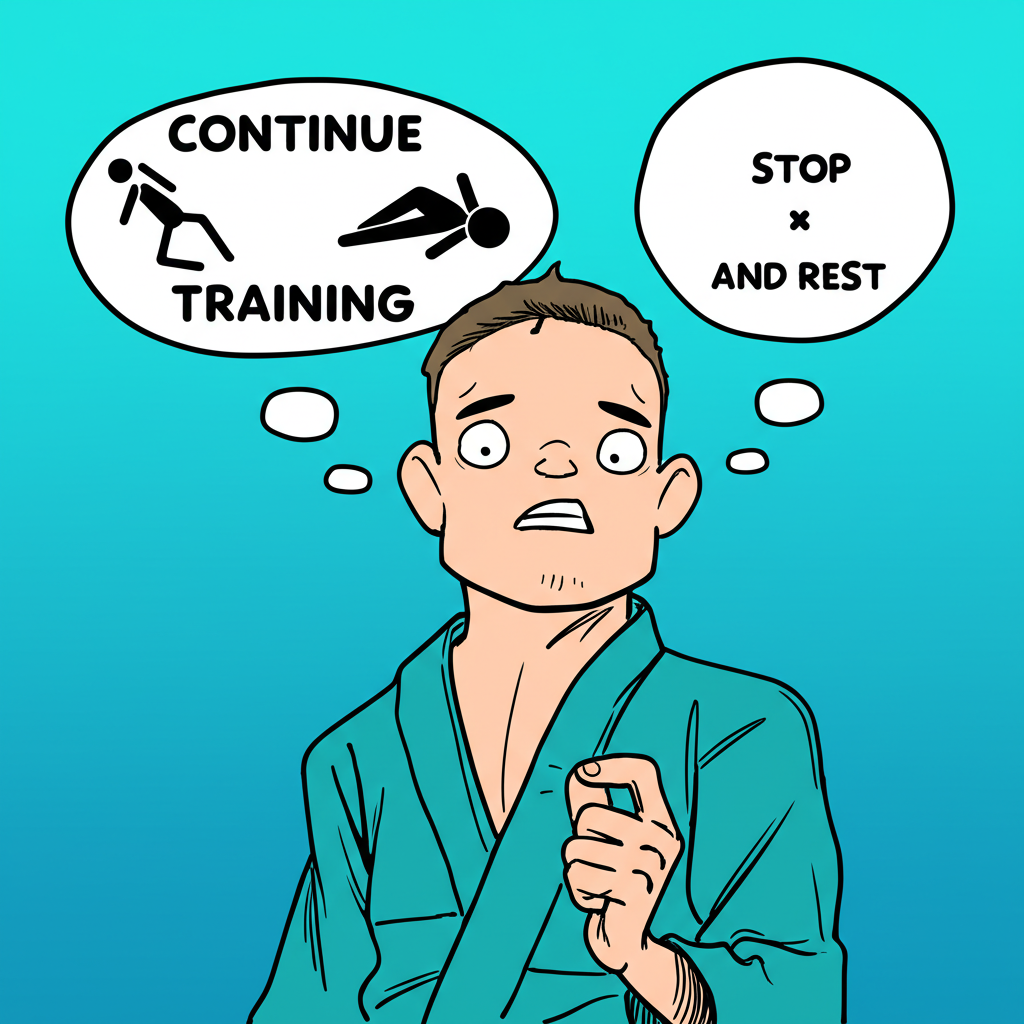
Quick Answer: Train through mild muscle soreness and normal discomfort. Stop for sharp pain, joint issues, anything that affects your movement quality, or pain that's getting worse instead of better.
The Short Answer
Train through mild muscle soreness and normal discomfort. Stop for sharp pain, joint issues, anything that affects your movement quality, or pain that's getting worse instead of better.
Understanding Pain Types
DOMS (Delayed Onset Muscle Soreness)
- Appears 24-72 hours after training
- Feels like general muscle ache
- Usually safe to train through
- Gets better with movement
Acute Pain
- Sudden onset during training
- Sharp, intense sensation
- Stop immediately
- Indicates potential injury
Chronic Pain
- Persistent, nagging pain
- May have been there for weeks
- Often worsens with training
- Needs evaluation and rest
Joint Pain vs. Muscle Pain
- Joint pain = usually bad, stop training that area
- Muscle pain = often okay to work through lightly
Green Light: Usually Okay to Train
General Muscle Soreness
You trained hard yesterday and your legs are sore. This typically improves with movement and light training.
Minor Fatigue
Feeling tired but not exhausted. Training lightly can actually help.
Mild Stiffness
Morning stiffness that eases with warm-up is normal, especially as you age.
Previous Injury That's Fully Healed
If your doctor cleared you and you've rehabbed properly, gradual return to training is fine.
Yellow Light: Proceed with Caution
Lingering Soreness
Soreness that lasts more than a few days deserves attention.
Pain That's "Different"
You know your body. If something feels off, pay attention.
Old Injuries Flaring
May need to modify training but not necessarily stop.
Illness Symptoms
Light training might be okay with mild symptoms, but don't train when actually sick.
Red Light: Stop Training
Sharp Pain
Any stabbing or shooting pain means stop immediately.
Joint Pain
Knees, shoulders, elbows, ankles - joint pain is almost never good to train through.
Pain That Gets Worse
If it hurts more after warming up than before, you're making it worse.
Swelling
Visible swelling means inflammation and tissue damage. Rest it.
Limited Range of Motion
If you can't move normally, don't train. You'll compensate and injure something else.
Signs of Concussion
Headache, confusion, vision issues after head impact - stop training and see a doctor.
Modifying Training
You Don't Have to Roll
- Drill only
- Positional sparring with restrictions
- Watch class and take notes
- Work on areas that aren't affected
Communicate with Partners
"My knee is bothering me, no leg attacks please" is completely acceptable.
Work Around Injuries
Upper body injury? Work legs. Lower body injury? Work upper body. There's almost always something you can train.
The Bigger Picture
Missing Training = Part of Training
Rest days and recovery are when your body actually gets stronger. They're not wasted time.
Short-Term vs. Long-Term Thinking
Training through an injury for one week might cost you months of recovery. Think long-term.
Career Longevity
Weekend warriors and hobbyists have no reason to rush back from injuries. You're training for enjoyment and fitness for decades, not a professional career.
When to See a Doctor
Definitely See Someone
- Pain lasting more than a week
- Any suspected fracture or dislocation
- Significant swelling or bruising
- Inability to use a limb normally
- Head injury symptoms
Consider Seeing Someone
- Recurring issues in the same area
- Pain that responds poorly to rest
- Uncertainty about what's wrong
Mental Health Consideration
Taking time off can be psychologically difficult. Remember:
- Your identity isn't just "BJJ practitioner"
- The gym will be there when you return
- Watching matches and studying can maintain connection
- Recovery is an active process, not passive waiting
Trust Yourself
You know your body better than anyone. If something feels wrong, it probably is. There's no glory in training through an injury that becomes permanent damage.
The mats will always be there. Your body needs to last a lifetime.
RELATED QUESTIONS
How Do I Prevent Injuries in BJJ?
Practical strategies to minimize injury risk while training BJJ, from warm-ups to recovery.
How Long Does It Take to Recover from Common BJJ Injuries?
Recovery timelines for common BJJ injuries and guidelines for returning to training safely.
How Do I Deal with Cauliflower Ear?
Understanding cauliflower ear - prevention, treatment, and what to do if it happens.
TRACK YOUR BJJ PROGRESS
Log training, track techniques, and see your improvement over time.
Try BJJChat Free