The Mental Game: Why BJJ Is 90% Mental After White Belt
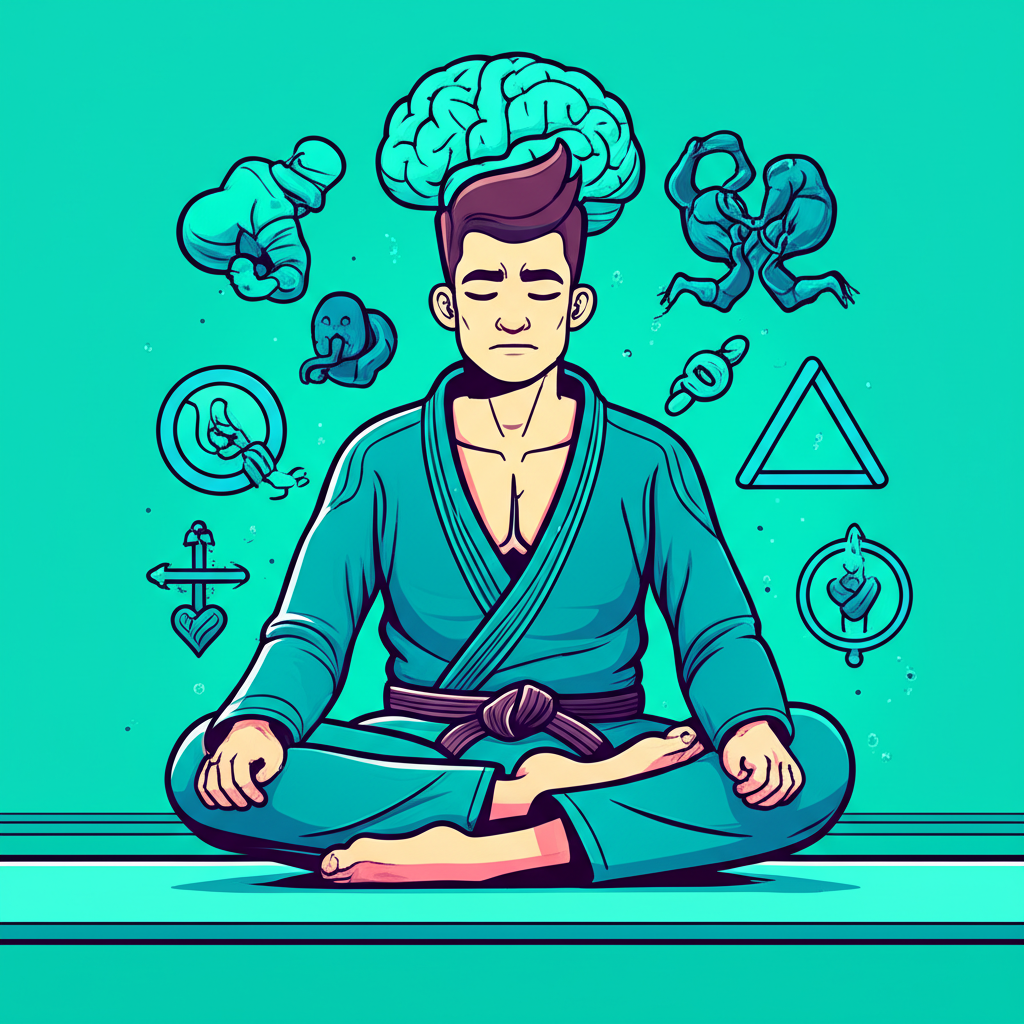
Exploring the psychological aspects of jiu-jitsu that separate good practitioners from great ones - and how to develop mental toughness on the mats.
You've probably heard the saying: "Jiu-jitsu is chess, not checkers." But here's a more accurate version: jiu-jitsu is chess played during a physical confrontation while managing fear, ego, and fatigue. The mental game isn't just important - after your first year or two, it's often the decisive factor.
The White Belt Bubble
When you first start BJJ, you're so overwhelmed with the physical learning curve that the mental game barely registers. You're just trying to figure out which way your limbs should bend and how to breathe while someone sits on your chest.
But something interesting happens as you progress. The techniques become more familiar. Your body starts moving more automatically. And suddenly, you have mental bandwidth to notice all the psychological warfare happening around you.
The Mental Challenges That Emerge
The Ego Battle
Every roll exposes your ego to potential damage. Will you get tapped by someone newer? Will your "A game" fail against a training partner who's been studying your weaknesses?
The practitioners who progress fastest are the ones who learn to separate their self-worth from their rolling performance. This is easier said than done. Our culture teaches us that losing is bad, that tapping is failing. BJJ requires a complete rewiring of that perspective.
Dealing with Plateaus
At some point, usually around blue or purple belt, you'll hit a wall where progress feels invisible. You're training consistently, you're studying techniques, but you're not getting better - or so it seems.
This is where mental fortitude becomes essential. Those who understand that plateaus are normal, even necessary, push through. Those who expect constant improvement often quit during these periods.
Performance Under Pressure
The mental skills required for competition are entirely different from training. Your heart rate is elevated before you even touch hands. Your fine motor skills deteriorate. Techniques you've done a thousand times suddenly feel foreign.
Learning to manage this mental state - to perform when it matters most - is a skill that must be developed deliberately.
Developing Mental Toughness
Embrace Discomfort
Mental toughness isn't about avoiding discomfort; it's about choosing to be uncomfortable. This means:
- Rolling when you're tired
- Starting from bad positions intentionally
- Training with people who consistently beat you
- Competing even when you're scared
Each time you choose discomfort, you're building psychological resilience.
Control Your Internal Dialogue
What you say to yourself during a roll matters enormously. "I'm getting destroyed" creates a very different mental state than "I'm being tested and learning."
Start paying attention to your internal dialogue. When you catch negative patterns, deliberately replace them with more constructive ones. This isn't about toxic positivity - it's about accurate thinking. Getting tapped isn't "destruction," it's feedback.
Develop Process Focus
Outcome-focused thinking (I need to win, I need to submit them) creates anxiety and impairs performance. Process-focused thinking (I'm going to work my guard passing, I'm going to stay calm and breathe) keeps you in the moment and performing better.
The irony is that by focusing less on outcomes, you often achieve better outcomes.
Build Meditation into Your Practice
Many elite grapplers meditate. The skills developed in meditation - present-moment awareness, equanimity, letting go of thoughts - translate directly to rolling.
You don't need an hour-long practice. Even five minutes of breath awareness before training can shift your mental state significantly.
The Mental Game in Rolling
Reading Your Opponent
Beyond the physical chess match, there's a psychological chess match happening. Can you sense when your opponent is about to explode? Can you feel when they're getting frustrated? Can you stay calm when they're trying to rattle you?
The best practitioners develop an almost uncanny ability to read their training partners - not just their physical movements, but their mental and emotional states.
Managing Your Own Emotions
Fear, frustration, anger, excitement - these emotions arise constantly during rolling. The question isn't whether they arise, but what you do with them.
Suppressing emotions doesn't work. They leak out anyway and affect your performance. The goal is acknowledgment without attachment: "I'm feeling frustrated. Interesting. Let me refocus on my breathing."
The Flow State
That elusive feeling where everything clicks - you're not thinking, just doing, and it's all working - is the holy grail of the mental game. You can't force flow, but you can create conditions that make it more likely:
- Being well-rested
- Having clear process goals
- Being present-focused
- Having appropriate challenge level
Flow becomes more accessible as you develop the other mental skills discussed above.
Long-Term Mental Development
Patience
BJJ black belt takes 10-15 years for most people. There is no rushing this. The mental skill of patience - of trusting the process over years and decades - is foundational.
Perspective
Your best rolls don't define you. Your worst rolls don't define you. BJJ is a practice, not a performance. The mental freedom that comes from this perspective is transformative.
Gratitude
On days when training is hard, when injuries pile up, when progress seems non-existent, gratitude becomes a choice. Choosing to appreciate the opportunity to train, the community, the learning - this mental practice sustains people through the inevitable difficulties.
The Competitive Edge
When two practitioners have similar technical skills, the one with the stronger mental game almost always wins. This is why competitive training includes mental preparation:
- Visualization of matches
- Stress inoculation training
- Competition simulations
- Mental rehearsal of game plans
If you want to compete seriously, developing these mental skills is not optional.
Starting Your Mental Training
Don't try to change everything at once. Pick one aspect of the mental game and work on it for a few weeks:
- Notice your internal dialogue during rolling. Just notice it.
- Practice one controlled breath when you get passed or submitted.
- Set one process goal before each roll ("I'm going to work collar drags").
- After training, reflect on your mental state - what worked, what didn't.
The mental game is a game within the game. It's invisible to observers but obvious to participants. And unlike physical skills that may decline with age, mental skills can continue developing for your entire BJJ journey.
Jiu-jitsu teaches us many things. Perhaps the most valuable is how to relate to our own minds - on and off the mats.
LEVEL UP YOUR BJJ GAME
Track your training, log techniques, and watch your progress unfold.
Try BJJChat Free