Should I Train Gi or No-Gi?
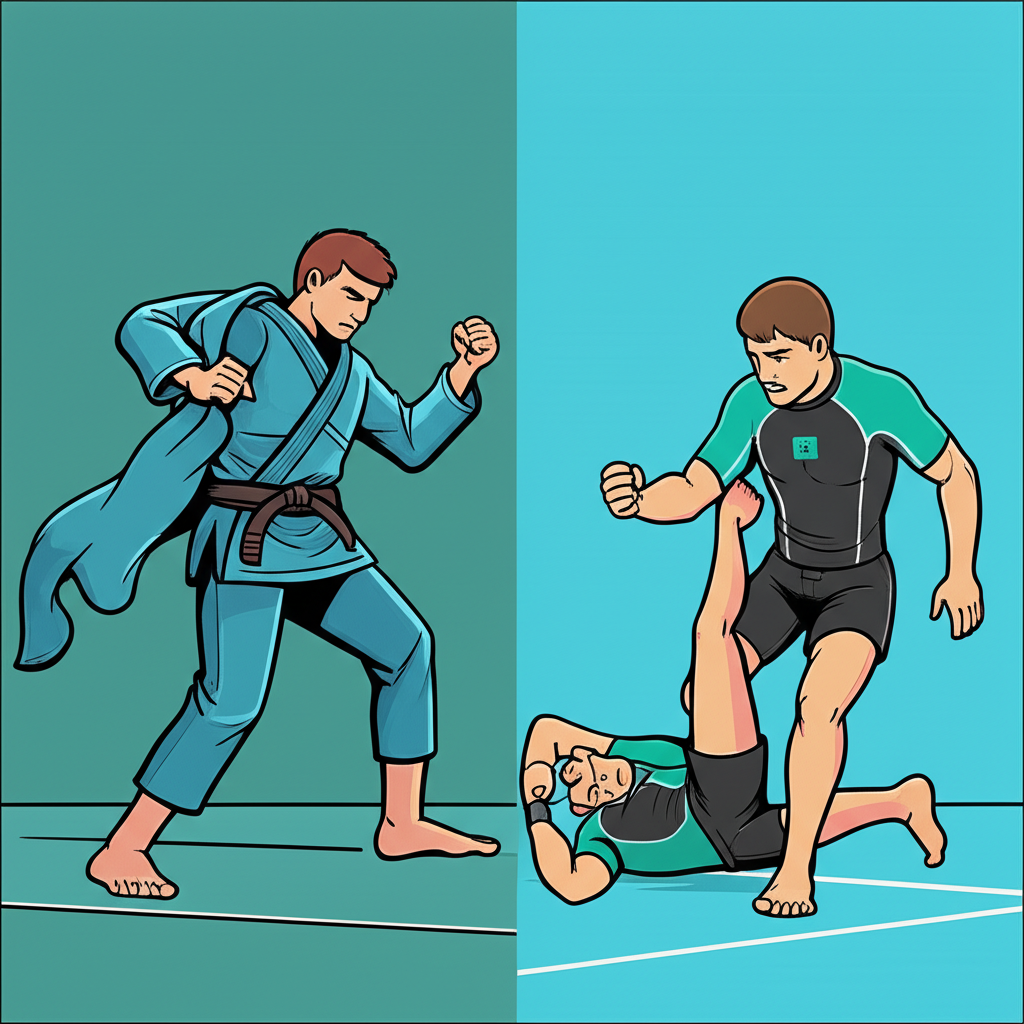
Quick Answer: Both! Most practitioners benefit from training both gi and no-gi BJJ. If you must choose, gi training is often recommended for beginners because it teaches more deliberate, technical jiu-jitsu.
The Short Answer
Both! Most practitioners benefit from training both gi and no-gi BJJ. If you must choose, gi training is often recommended for beginners because it teaches more deliberate, technical jiu-jitsu.
The Key Differences
Speed of Play
- Gi - Slower, more methodical. The fabric creates friction and allows grips that slow things down.
- No-Gi - Faster, more scramble-heavy. Sweat makes you slippery and transitions happen quickly.
Grips and Controls
- Gi - Collar, sleeve, pants, belt grips. Many techniques rely on fabric manipulation.
- No-Gi - Over/under hooks, wrist control, body locks. No fabric to grab.
Technique Emphasis
- Gi - More guard variations, slower passes, chokes using the collar.
- No-Gi - More wrestling, guillotines, leg locks, body lock passing.
Competition Rules
- Gi - IBJJF rules, specific gi requirements, some techniques restricted by belt.
- No-Gi - Often more permissive with leg locks (varies by organization).
Arguments for Gi Training
Builds Technical Foundation
The gi slows things down, forcing you to be precise. You can't muscle through bad technique as easily.
More Defensive Skills
Defending grips teaches awareness of how you're being controlled. This translates to better defense overall.
Tradition and Community
Gi training connects you to BJJ's roots. Many gyms are more gi-focused.
Competition Availability
More tournaments offer gi divisions, especially at local levels.
Arguments for No-Gi Training
Faster Application
You learn to work with speed and scrambles from the start.
Self-Defense Reality
In a real confrontation, your attacker probably isn't wearing a gi.
MMA Transferability
If MMA interests you, no-gi is more applicable.
Less Gear Required
Rash guard and shorts are cheaper and easier to maintain than gis.
The Case for Training Both
Complete Game
Gi skills transfer to no-gi, and no-gi speed improves your gi game.
Avoid Blind Spots
Exclusive gi players can be lost without grips. Exclusive no-gi players miss choke opportunities.
More Training Opportunities
Training both means more class options and open mats available to you.
Well-Rounded Practitioner
The best in the world (Gordon Ryan, Roger Gracie, etc.) excel at both.
Choosing Based on Goals
If Your Goal is Self-Defense
Start with both, but lean no-gi. Real-life attacks happen in regular clothes.
If Your Goal is MMA
Focus on no-gi, but gi fundamentals still help.
If Your Goal is Traditional BJJ Competition
Gi should be your primary, with no-gi as supplemental.
If Your Goal is Submission Grappling Competition (ADCC-style)
No-gi is primary, gi as secondary.
If Your Goal is General Fitness/Fun
Do whichever you enjoy more. Both provide great workouts.
Gym Considerations
Class Availability
Your choice may be limited by what your gym offers. Many gyms are primarily gi with some no-gi classes.
Coach Expertise
Some coaches specialize in one or the other. Find out your coaches' backgrounds.
Training Partners
If most people at your gym train gi, that's where you'll get the best training.
Common Myths
"Gi Is Slow and Boring"
High-level gi matches are incredibly technical and dynamic. Slow isn't boring when you understand the chess match.
"No-Gi Doesn't Work Against the Gi"
Many techniques work across both. Arm drags, kimuras, RNCs - all transfer well.
"You Can't Learn Defense in No-Gi"
You absolutely can. It's just a different type of defense.
"Gi Players Can't Handle No-Gi"
Transition takes time, but fundamentals transfer. Same with no-gi to gi.
Beginner Recommendation
If your gym offers both:
- Primary: Gi (2-3 classes per week)
- Secondary: No-gi (1-2 classes per week)
This ratio helps build a technical foundation while developing comfort in both environments.
After 1-2 years, adjust based on your preferences and goals.
The Bottom Line
The best jiu-jitsu is the jiu-jitsu you'll actually train. If you love no-gi and hate gi (or vice versa), train what you'll show up for consistently.
But if you're open to both, training both makes you a more complete grappler.
RELATED QUESTIONS
What Gi Should I Buy as a Beginner?
A beginner's guide to buying your first BJJ gi - what to look for, price ranges, and top recommendations.
What Gear Do I Need to Start BJJ?
Essential and optional gear for BJJ training - what you actually need vs. what can wait.
How Do I Choose the Right Gi Size?
Understanding BJJ gi sizing, how to measure yourself, and tips for getting the perfect fit.
TRACK YOUR BJJ PROGRESS
Log training, track techniques, and see your improvement over time.
Try BJJChat Free